
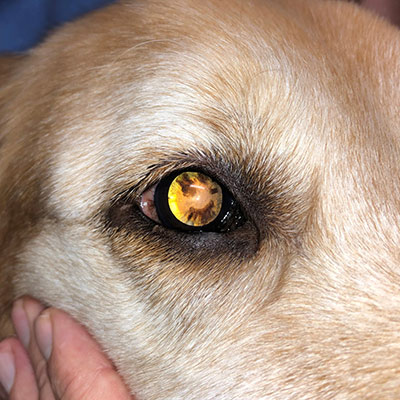
Pigment Dispersion Syndrome in Dogs
Pigment dispersion syndrome, often called pigmentary uveitis or golden retriever uveitis, is an inherited eye disease in which pigment and fluid-filled cysts build up inside the eye. It progresses slowly but can lead to glaucoma, cataracts, and blindness. At Animal Eye Clinic, Dr. Robert M. Gwin diagnoses and monitors this condition to help preserve your dog’s vision.
Request an AppointmentWhat Is Pigment Dispersion Syndrome?
In pigment dispersion syndrome, pigment from the iris is released and deposited on the lens capsule and other structures inside the eye. Thin-walled cysts from the iris may also form. Over time, this is accompanied by chronic, low-grade inflammation, a form of uveitis. The condition is most common in Golden Retrievers, usually appearing in middle age, and often affects both eyes.
Signs to Watch For
Early pigment dispersion syndrome may cause no obvious signs, which is why routine eye exams are so valuable for at-risk breeds. As it progresses, you may notice:
- Mild redness of the eye
- Squinting or tearing
- Visible dark cysts or pigment within the eye
- Cloudiness of the cornea or lens
- Changes in vision
Potential Complications
The ongoing inflammation and pigment buildup can block the eye’s drainage pathways, leading to secondary glaucoma, which is the most serious complication. It can also contribute to cataract formation and adhesions of the iris to the lens.
Diagnosis and Treatment
Dr. Gwin diagnoses pigment dispersion syndrome with a detailed slit lamp examination and eye pressure measurement. Ocular ultrasound may be used to evaluate cysts and deeper structures.
There is no cure, but early detection and consistent management can slow progression and reduce the risk of glaucoma. Treatment usually involves long-term topical anti-inflammatory medications, and pets that develop elevated eye pressure receive glaucoma medications. Regular rechecks, often every few months, allow Dr. Gwin to monitor eye pressure and adjust therapy before vision is threatened. Explore other ophthalmic diseases we treat.
Pigment Dispersion Syndrome FAQs
Which dogs get pigment dispersion syndrome?
It is most common in Golden Retrievers and usually develops in middle age.
Is pigment dispersion syndrome the same as golden retriever uveitis?
Yes. It is often called pigmentary uveitis or golden retriever uveitis.
Can pigment dispersion syndrome cause blindness?
Yes. Without monitoring and treatment, it can lead to glaucoma and cataracts that cause vision loss.
Is there a cure?
There is no cure, but long-term medication and regular rechecks can slow progression and protect vision.
How often should my dog’s eyes be checked?
Dogs with this condition often need rechecks every few months to monitor eye pressure and inflammation.
Should I have my Golden Retriever’s eyes screened?
Yes. Routine eye exams help detect early signs before symptoms appear, giving the best chance of preserving vision.
Protect Your Golden Retriever’s Vision
Call (918) 632-0508 (Tulsa) or (405) 751-3821 (Oklahoma City) to schedule an eye exam with Dr. Gwin.