
Deviated Globe Treatment for Dogs and Cats
Traumatic deviation of the globe is an acute event that is understandably frightening for pet owners. It is most common in dogs with prominent eyes, such as Boston Terriers, Shih Tzus, Pekingese, and Pugs, and less frequently in collie-type breeds. At Animal Eye Clinic, Dr. Robert M. Gwin offers surgical correction to return a deviated eye to a more normal, comfortable position.
Request an AppointmentWhat Is a Deviated Globe?
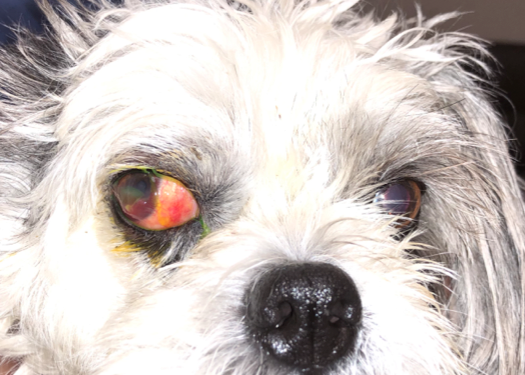
In the acute phase, the eye is propelled forward and out of the orbital socket to varying degrees, a condition called proptosis. The globe may sit outside the eyelids. This is most often seen after severe head trauma, such as dog fights and vehicle accidents, and can be quite devastating to see.
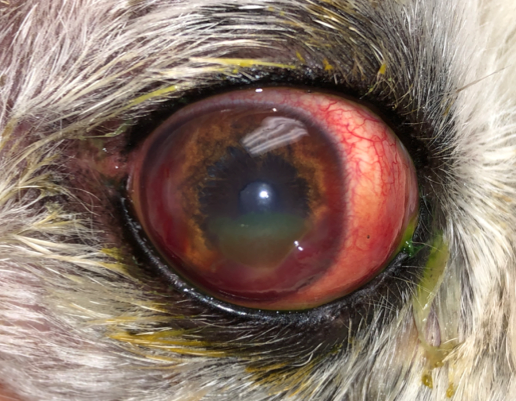
When proptosis occurs, the extraocular muscles that hold the eye in position and allow it to move are frequently damaged. This results in a forward and outward deviation of the eye even after it has been surgically returned to the orbit. This is what is termed a deviated globe.
Treatment for Proptosis and Deviated Globe
Emergency Treatment
In the acute case, the dog is taken to a veterinarian, where it is normally anesthetized and the globe is manually repositioned into the orbital socket. This is not always possible. Once the eye is back in place, the eyelids are usually sutured partially closed to protect the globe and prevent it from proptosing again. In most cases, the optic nerve is so damaged by the trauma that vision is very rarely saved, though there are exceptions. Time is extremely important, so seek emergency care immediately.
Surgical Correction of a Deviated Globe
In some cases, the deviation returns to a more normal position on its own within a few days to two or three weeks. When the deviation is severe, cosmetic and functional problems from exposure, such as corneal damage, corneal ulcers, and inflammation, can be very significant.
A deviated globe can be surgically corrected with a procedure that places a nylon pulley or sling which, when tightened, pulls the globe back into a more normal position. This procedure normally needs to be performed within the first two to three weeks, though timing varies. Most of these eyes are not visual, but regaining a comfortable, non-irritated eye in a normal position is very helpful for your pet. Learn more about ocular trauma and our surgical procedures.
Deviated Globe FAQs
What should I do if my dog’s eye pops out?
Keep the eye moist with saline or water, prevent your dog from rubbing it, and go to a veterinarian or emergency hospital immediately. Time is critical.
Which breeds are prone to proptosis?
Dogs with prominent eyes and shallow sockets, such as Boston Terriers, Shih Tzus, Pekingese, and Pugs, are most at risk.
Will my dog see again after proptosis?
Vision is rarely saved because the optic nerve is often severely damaged, though there are exceptions, especially with very quick treatment.
Can a deviated globe correct itself?
Sometimes the eye returns to a more normal position within a few days to three weeks without surgery.
How is a deviated globe surgically corrected?
Dr. Gwin places a nylon pulley or sling that, when tightened, pulls the eye back into a more normal position.
When should deviated globe surgery be done?
It is usually best performed within the first two to three weeks after the injury.
Get Expert Care After an Eye Injury
Call (918) 632-0508 (Tulsa) or (405) 751-3821 (Oklahoma City) to schedule an evaluation with Dr. Gwin.