Distichia Treatment for Dogs
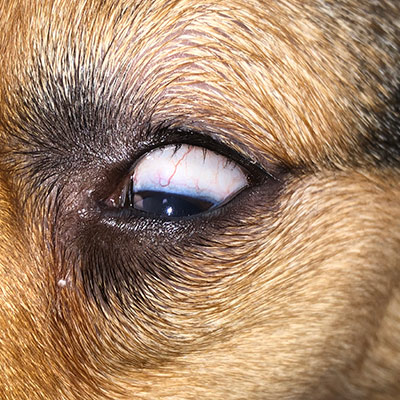
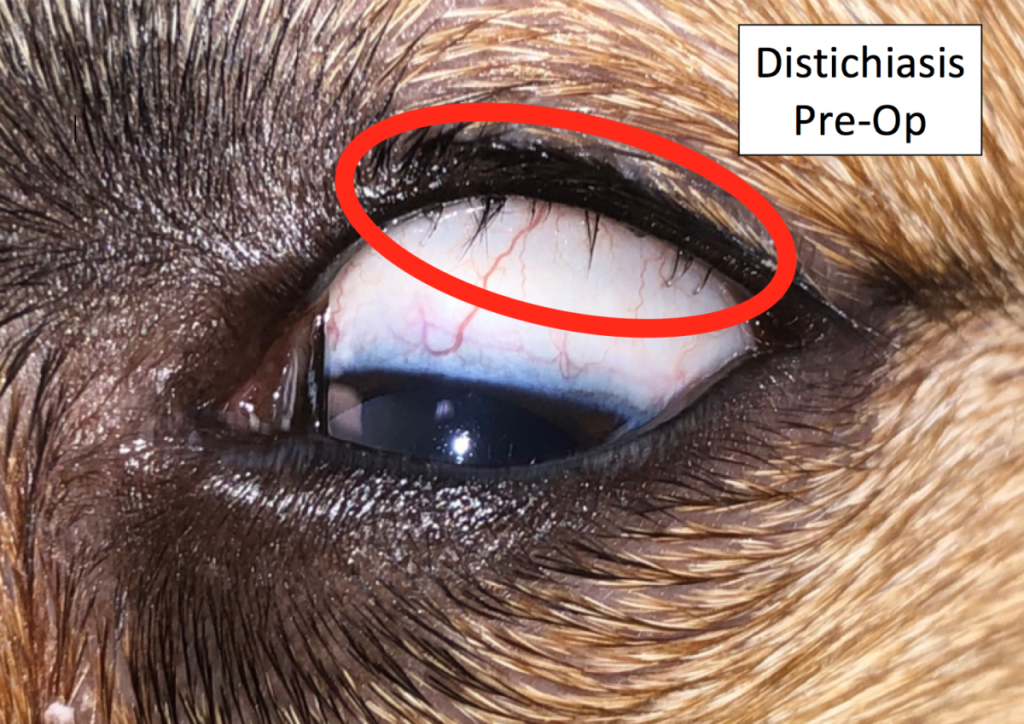
Distichiasis is the presence of abnormal eyelashes along the eyelid margin. These lashes, called distichia, are produced by the meibomian glands, which normally supply important oils for a healthy tear film. At Animal Eye Clinic, Dr. Robert M. Gwin permanently removes distichia with cryosurgery to relieve irritation and protect the cornea.
Request an AppointmentSigns and Effects of Distichia
These extra eyelashes can cause significant irritation to the eye. In milder forms, tearing and squinting (blepharospasm) are observed. In more severe cases, active inflammation of the cornea (keratitis) develops, which can progress to corneal ulceration, blood vessel growth into the cornea, and corneal pigment similar to pigmentary keratitis.
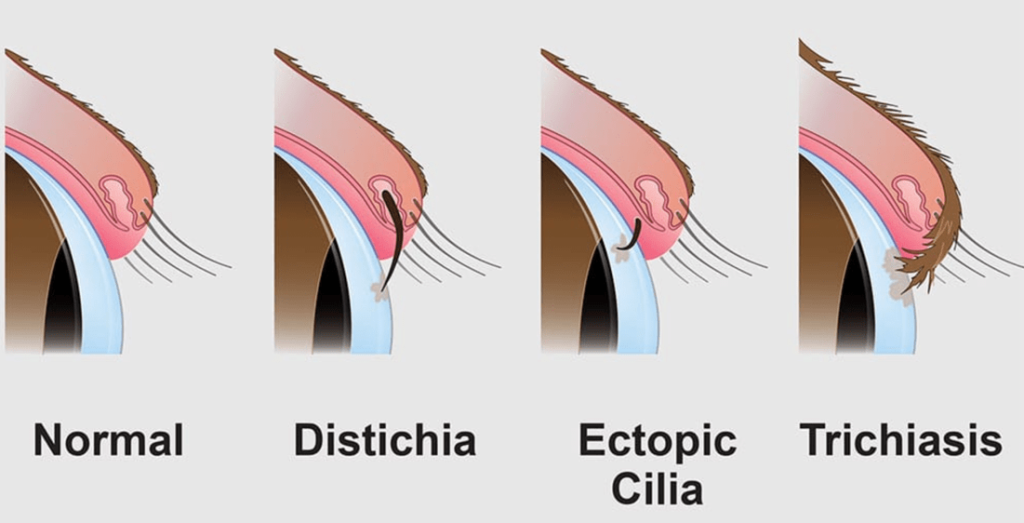
Distichia are especially common in breeds such as Cocker Spaniels, Shih Tzus, Lhasa Apsos, and English Bulldogs, though they can appear in any dog. They are closely related to ectopic cilia, which grow through the inner surface of the eyelid instead of the lid margin.
Cryosurgery for Distichia
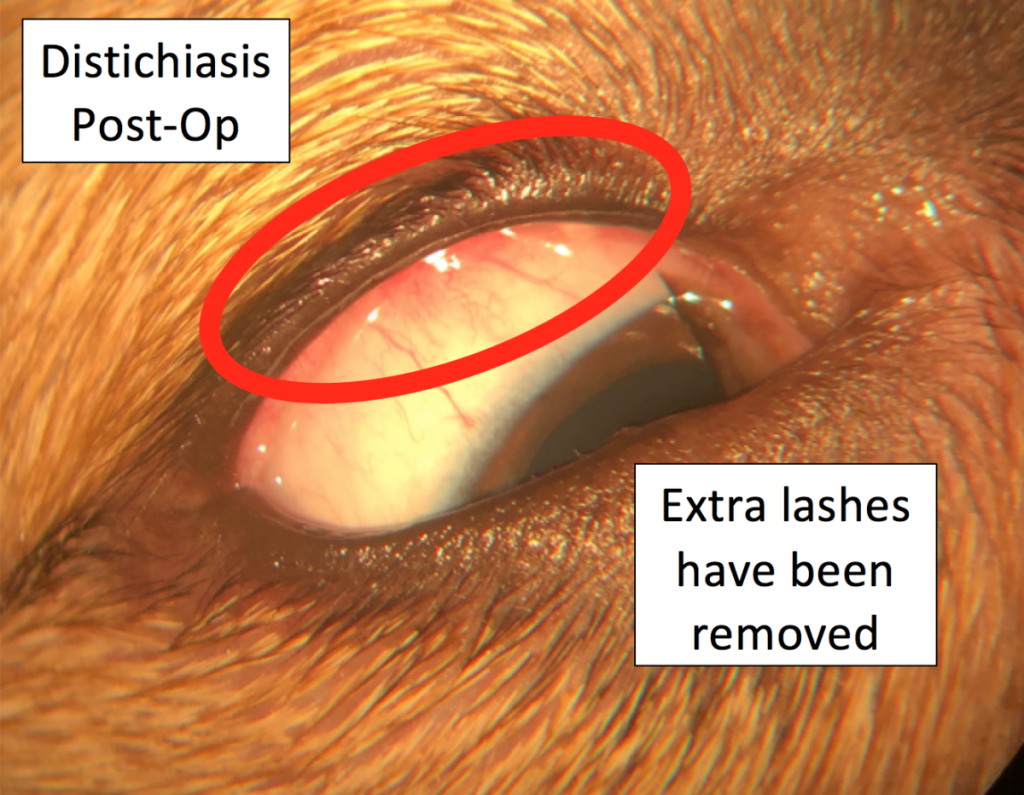
The best way to remove these unwanted extra eyelashes is with cryosurgery. A 3 mm cryosurgical probe is placed at the base of the follicle containing the lash or lashes. Usually, two short freeze cycles destroy the follicle’s ability to produce the lash, and the offending lash is then removed with small forceps. In severe cases, there may be 30 or more lashes per eyelid.
After the procedure, the eyelid will be puffy and irritated for two to three days but quiets down fairly quickly. There may be some depigmentation of the eyelid margin, and it may take two to three months for the pigment to return. Learn more about our eyelid surgery and other procedures.
Distichia FAQs
What are distichia?
Distichia are abnormal eyelashes that grow from the meibomian glands along the eyelid margin and can rub against the eye.
Do all distichia need treatment?
Not always. Soft lashes that don’t cause irritation may only need monitoring, while lashes causing tearing, squinting, or ulcers should be removed.
Why not just pluck the extra eyelashes?
Plucked lashes grow back, often stiffer. Cryosurgery destroys the follicle so the lash doesn’t return.
How is distichia cryosurgery performed?
A 3 mm cryoprobe freezes the base of each abnormal follicle, usually with two short freeze cycles, and the lash is removed with forceps.
What is recovery like after cryosurgery?
The eyelids are puffy and irritated for two to three days, and some pigment loss on the lid margin may take two to three months to return.
Which breeds commonly get distichia?
Cocker Spaniels, Shih Tzus, Lhasa Apsos, and English Bulldogs are among the breeds commonly affected.
Relieve Your Pet’s Eye Irritation
Call (918) 632-0508 (Tulsa) or (405) 751-3821 (Oklahoma City) to schedule a distichia evaluation with Dr. Gwin.