Dry Eye (KCS) Treatment for Dogs and Cats
Keratoconjunctivitis sicca, commonly called dry eye, is a lack of normal tear production that is seen frequently in dogs and less often in cats. It makes up 15 to 20 percent of the cases presented to Dr. Robert M. Gwin at Animal Eye Clinic, and early, consistent treatment is the key to keeping your pet comfortable and protecting vision.
Request an AppointmentWhat Is Dry Eye?
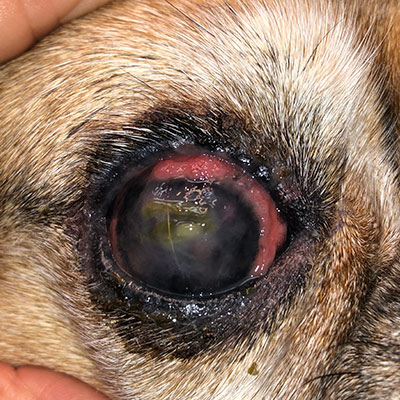
Aqueous tears provide nutrients and lubrication to the surface of the cornea, which has no blood vessels of its own. Dry eye develops when the glands surrounding the eye, including the gland of the third eyelid, don’t produce enough tears. Without adequate tears, the cornea and conjunctiva become irritated, inflamed, and prone to damage. Both eyes are commonly involved.
Dry eye is often immune mediated, but it can also be associated with certain medications, infections, nerve damage, or removal of the third eyelid gland, which is why repositioning rather than removing a prolapsed cherry eye gland is so important.
Signs of Dry Eye
- Red, irritated eyes
- Thick, mucoid or yellow-green discharge
- Squinting and discomfort
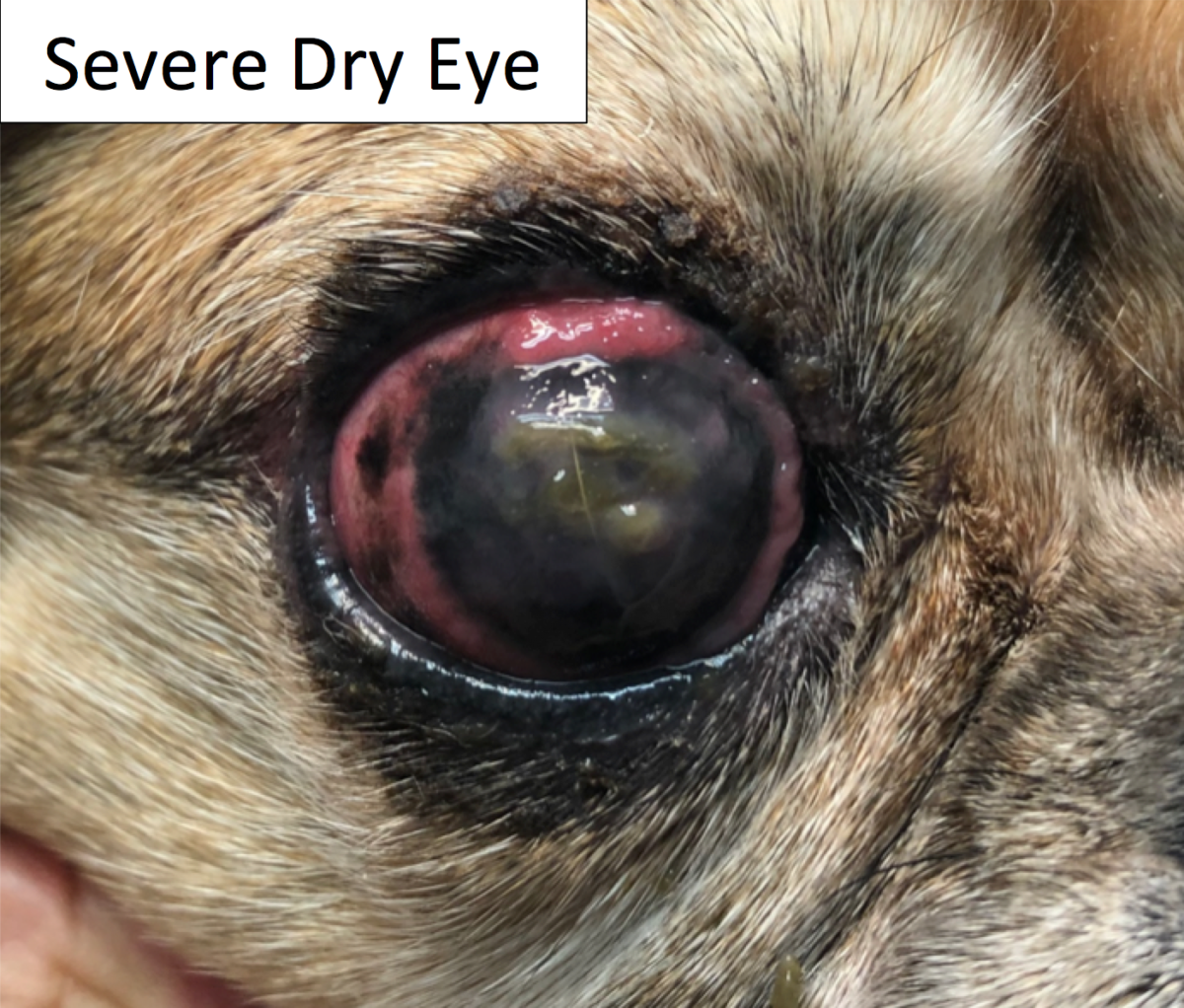
- A dull, dry-looking corneal surface
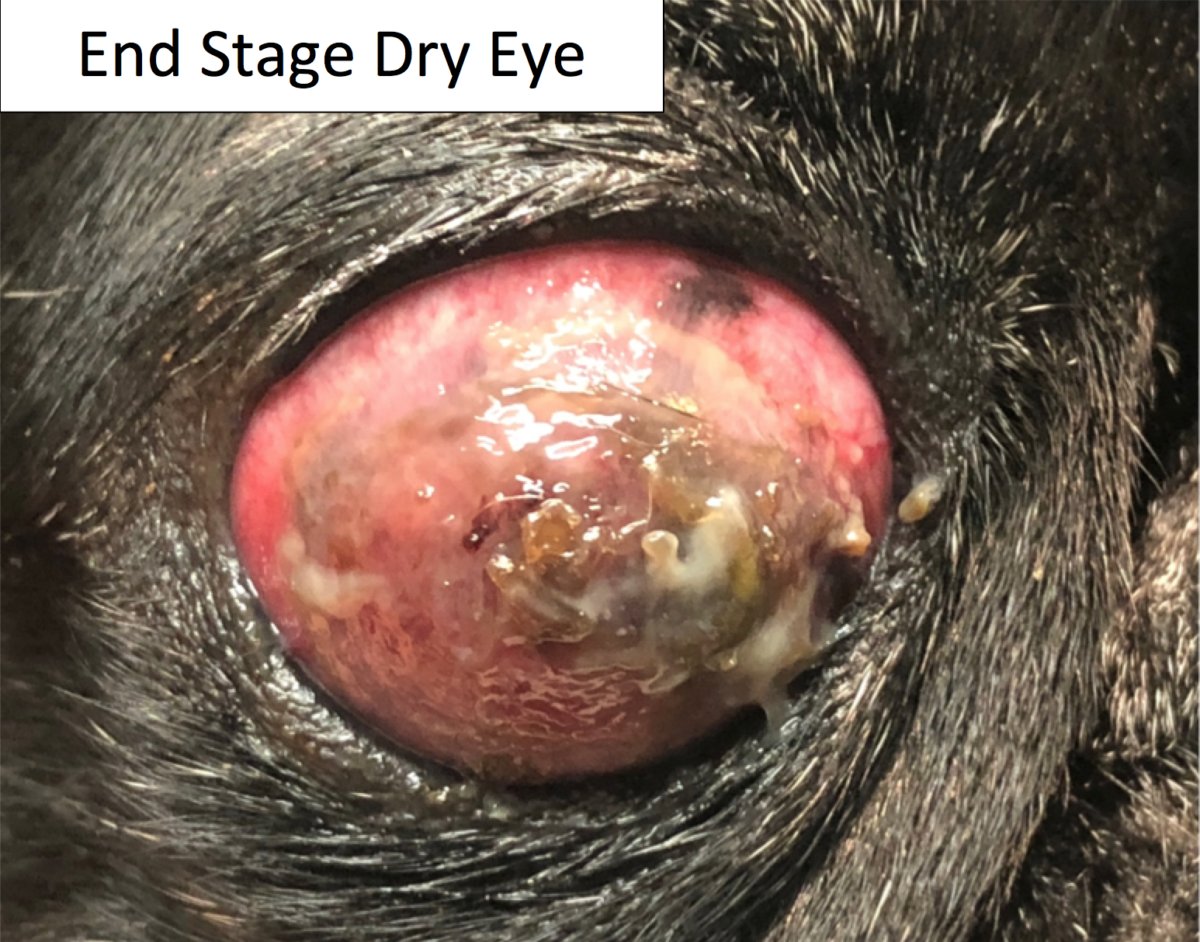
- Decreasing vision from advancing corneal disease in severe cases
Dry eye is diagnosed with a Schirmer tear test, which measures tear production during your pet’s exam.
Dry Eye Treatment
As you would expect, treatment for dry eye varies depending on the nature and severity of the problem and its underlying cause. Medical therapy can be somewhat complex and may involve several medications given several times a day. In addition to increasing tear production, resolving secondary corneal disease and infectious and inflammatory components can be challenging. The lower the initial tear production and the longer the disease has been present, the more difficult these cases tend to be.
Medical therapy involves topical antibiotics, non-steroidal immunomodulating medications (T-lymphocyte blockers) that stimulate tear production, and in select cases topical cortisone. Artificial tears and over-the-counter lubricants are of almost no value in treating the underlying disease. Most pets with dry eye need lifelong treatment and regular rechecks to keep tear production stable. Untreated dry eye can lead to corneal ulcers and pigmentary keratitis.
Dry Eye FAQs
What causes dry eye in dogs?
Dry eye is often immune mediated, but it can also result from certain medications, infections, nerve damage, or removal of the third eyelid gland.
How is dry eye diagnosed?
Dr. Gwin uses a Schirmer tear test to measure tear production as part of a complete eye exam.
Can artificial tears treat dry eye?
No. Artificial tears and over-the-counter lubricants are of almost no value in treating the underlying disease. Prescription medications are needed.
Is dry eye curable?
Dry eye usually can’t be cured, but with consistent treatment most pets stay comfortable and keep their vision.
Will my pet need medication for life?
Most pets with dry eye need lifelong medication and periodic rechecks to maintain tear production.
What happens if dry eye isn’t treated?
Untreated dry eye can cause chronic pain, corneal ulcers, scarring, pigment, and vision loss.
Do cats get dry eye?
Yes, though it is less common in cats than dogs and is often associated with feline herpesvirus.
Help Your Pet’s Eyes Feel Better
Call (918) 632-0508 (Tulsa) or (405) 751-3821 (Oklahoma City) to schedule a dry eye evaluation with Dr. Gwin.