
Corneal Ulcer Treatment for Dogs and Cats
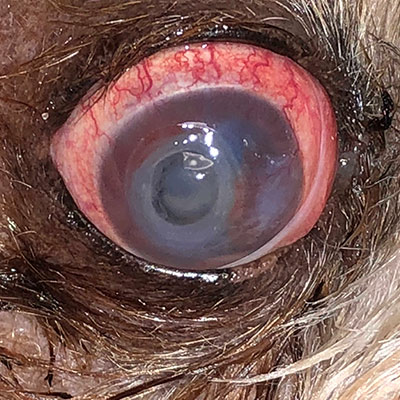
The cornea is the clear, curved front of the eye that allows light to pass to the back of the eye. A corneal ulcer, like an ulcer on the skin or stomach, is an erosion of this tissue. At Animal Eye Clinic, Dr. Robert M. Gwin diagnoses and treats simple, complicated, and melting corneal ulcers in dogs and cats at our Tulsa and Oklahoma City offices.
Request an AppointmentWhat Causes Corneal Ulcers?
Corneal ulcers come in a wide variety of forms, degrees of severity, and underlying causes. Common causes include:
- Bacterial, fungal, and viral infections, including feline herpesvirus
- Dry eye (keratoconjunctivitis sicca)
- Trauma and scratches (ocular trauma)
- Foreign bodies
- Exposure from prominent eyes or incomplete blinking
- Abnormal eyelashes such as distichia and ectopic cilia
- Eyelid problems such as entropion
- Autoimmune and degenerative processes, including corneal dystrophy
Signs of a Corneal Ulcer
Pets with corneal ulcers often squint, tear excessively, hold the eye closed, rub at it, or develop redness and cloudiness on the eye’s surface. Because ulcers can worsen quickly, any of these signs should be evaluated promptly.
Corneal Ulcer Treatment
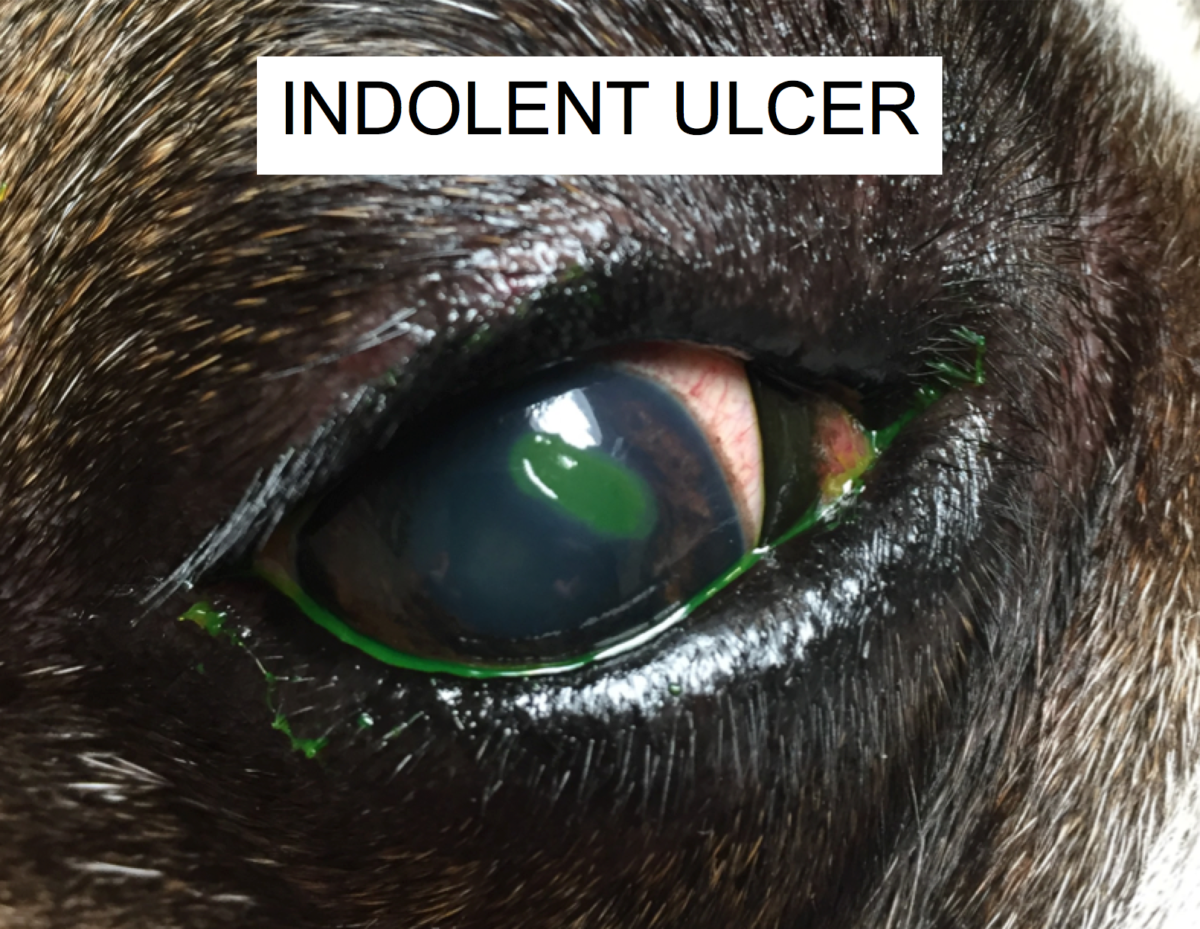
Therapy depends on the nature of the ulcer. Diagnosis begins with a fluorescein stain, which highlights damaged areas of the cornea, along with a complete eye exam to identify the underlying cause.
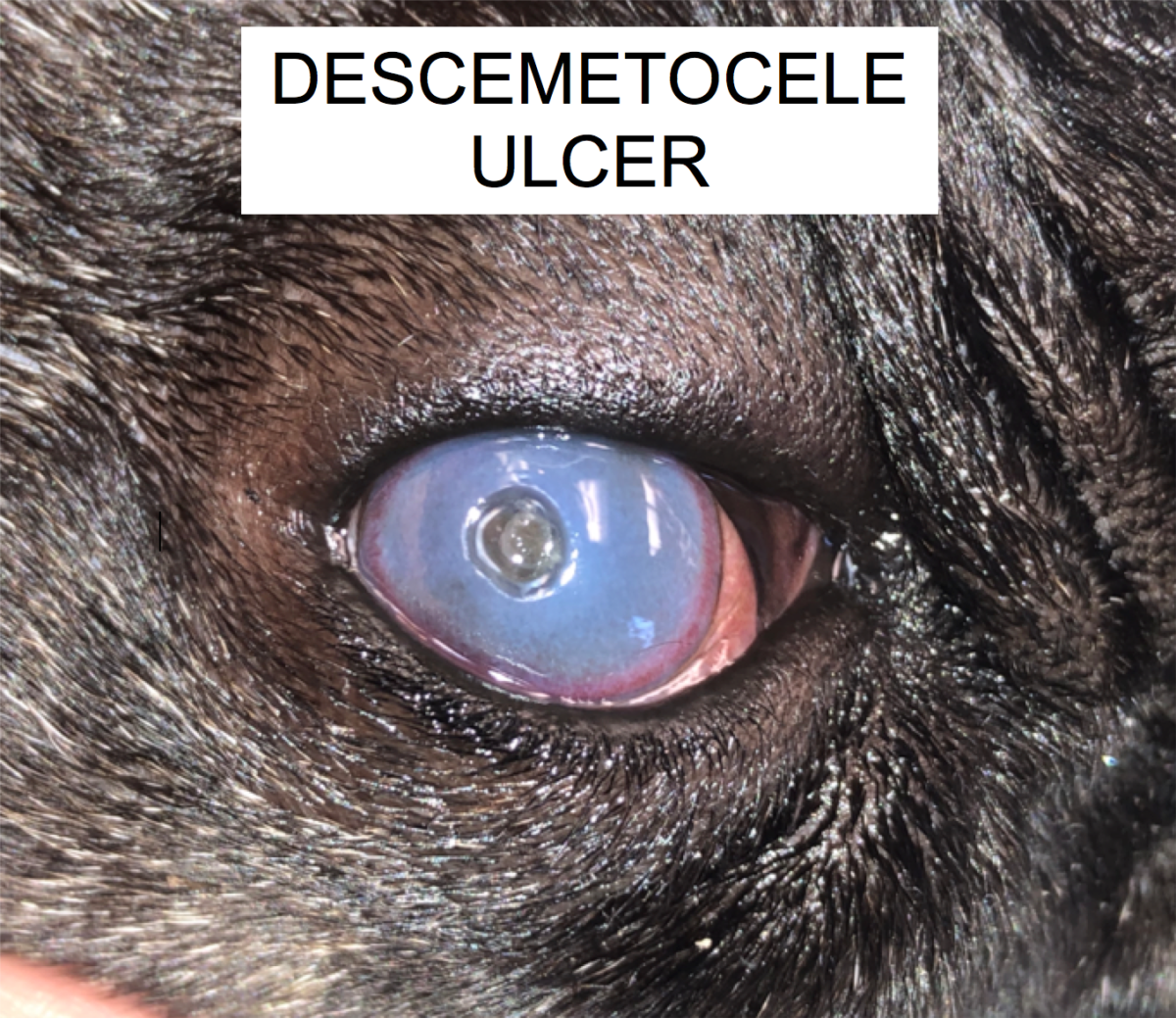
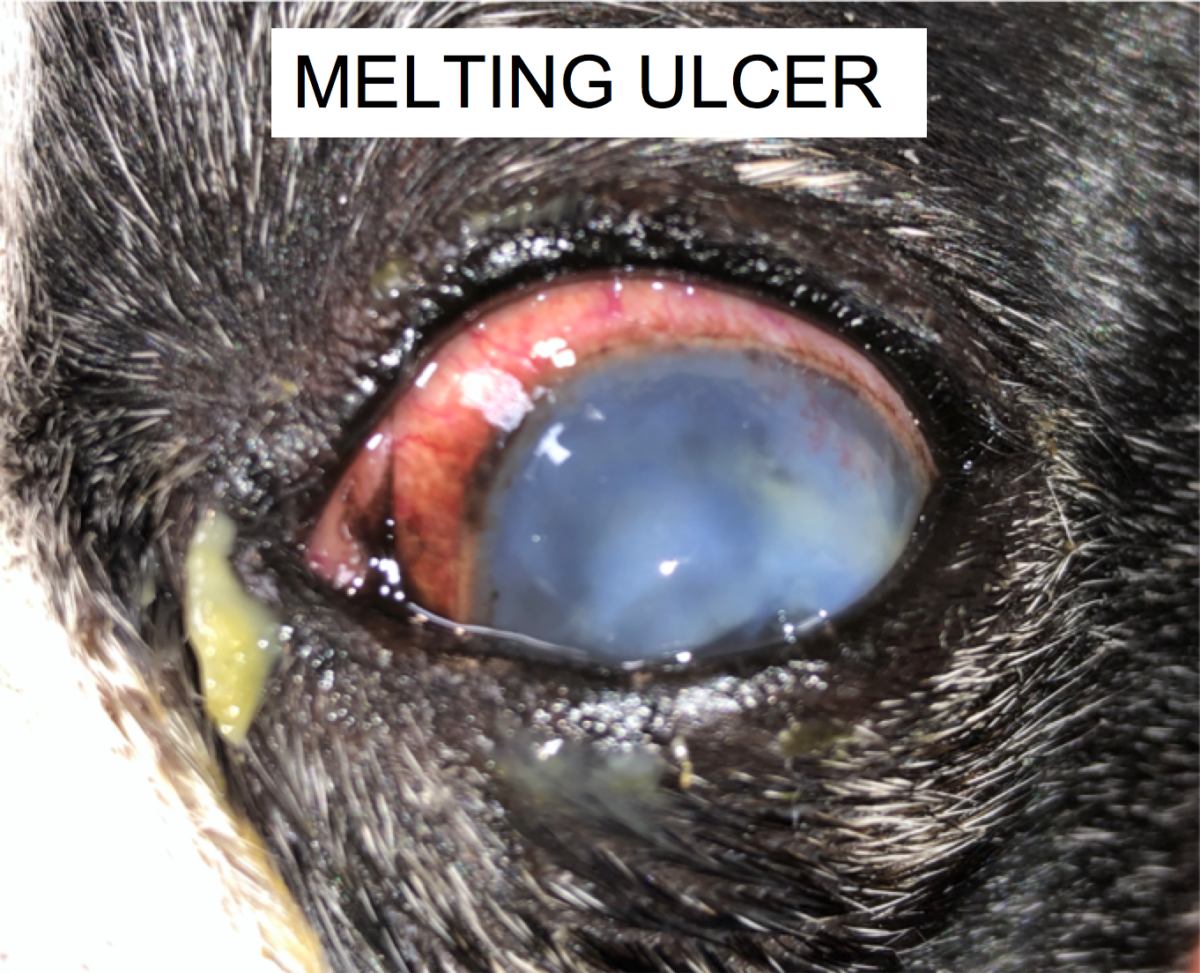
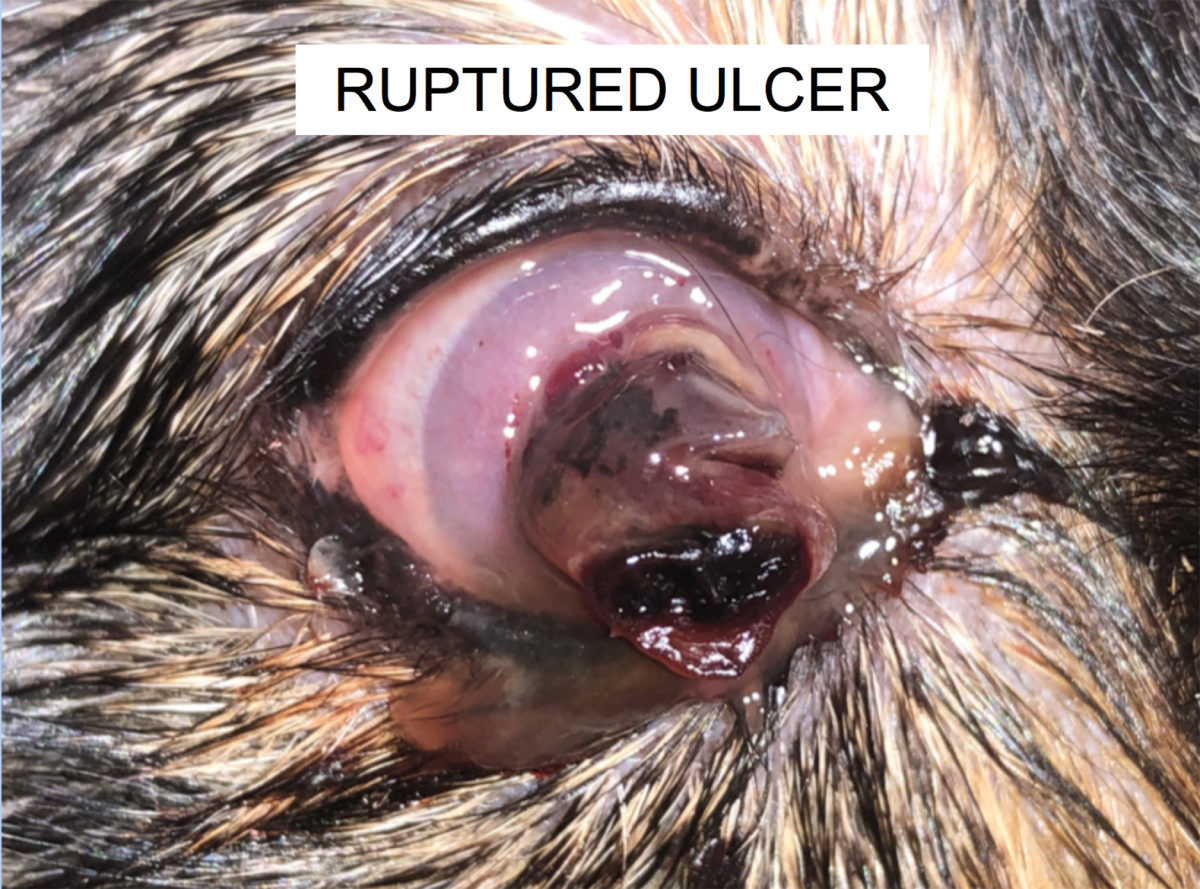
Bacterial ulcers tend to be the most devastating and, in some cases, cause the corneal tissue to “melt.” These require aggressive medical therapy and sometimes surgery, such as a conjunctival flap graft or corneal repair. Permanent loss of vision, or even of the eye itself, is a real possibility with severe ulcers, which is why early, expert treatment matters. Medical and surgical treatment decisions are involved and are tailored to each patient. Learn more about our surgical procedures.
Corneal Ulcer FAQs
How do I know if my pet has a corneal ulcer?
Common signs include squinting, tearing, redness, cloudiness, and rubbing at the eye. A fluorescein stain test confirms the diagnosis.
Are corneal ulcers an emergency?
Deep, infected, or melting ulcers are emergencies that can lead to vision loss or loss of the eye, so any suspected ulcer should be seen promptly.
What causes corneal ulcers in dogs and cats?
Causes include trauma, infections, dry eye, foreign bodies, abnormal eyelashes, eyelid problems, and exposure.
How are corneal ulcers treated?
Treatment depends on the type and severity and may include antibiotic drops, pain control, and in severe cases surgery such as a conjunctival flap.
How long does a corneal ulcer take to heal?
Simple ulcers often heal within about a week, while deep or complicated ulcers can take longer and need close monitoring.
Can corneal ulcers come back?
Yes, especially if the underlying cause, such as dry eye or abnormal lashes, isn’t addressed.
Why do some ulcers not heal?
Infection, an underlying eyelid or lash problem, dry eye, or a loose layer of corneal tissue can prevent healing and may require specialized treatment.
Don’t Wait on a Painful Eye
Call (918) 632-0508 (Tulsa) or (405) 751-3821 (Oklahoma City) to schedule an exam for your pet’s corneal ulcer.