Cherry Eye Surgery for Dogs and Cats
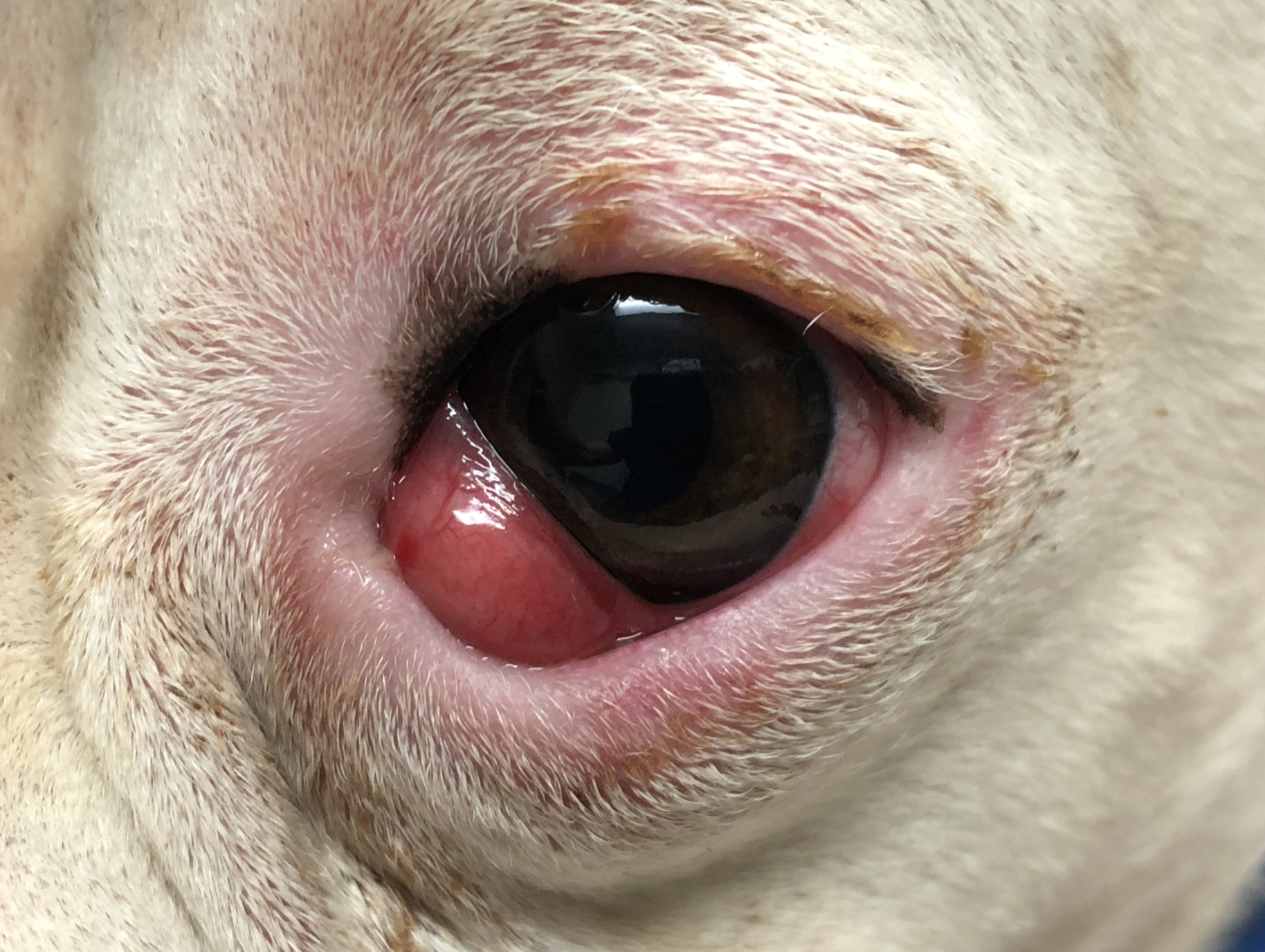
Cherry eye, or a prolapsed gland of the third eyelid, appears as a round, red mass in the inner corner of the eye. At Animal Eye Clinic, Dr. Robert M. Gwin uses a delicate but very successful surgical technique to reposition the gland so it can keep producing healthy tears, serving pets at our Tulsa and Oklahoma City offices.
Request an AppointmentWhat Is a Prolapsed Gland of the Third Eyelid?
The third eyelid is a structure in the inner, or nasal, corner of the eye that is often not very visible to owners. A gland at its base produces a significant amount of the aqueous tear film, which makes it important for maintaining good tear production and preventing dry eye.
This gland can prolapse, or move out of its normal position. The common term for this is “cherry eye” because of its round, reddish appearance. Prolapse can happen spontaneously and may affect one or both eyes.
Breeds Prone to Cherry Eye
In many cases, cherry eye is associated with a breed predisposition, including Cocker Spaniels, English Bulldogs, Beagles, and other breeds. It is most often seen in young dogs and is occasionally seen in cats.
Signs of Cherry Eye
- A pink or red swelling in the inner corner of the eye
- Tearing or mucus discharge
- Redness and irritation
- Rubbing at the eye
Cherry Eye Treatment
Placing the gland back into its normal position is a somewhat delicate procedure, but it is very successful with Dr. Gwin’s technique. Repositioning preserves the gland’s tear production and helps protect your pet from developing dry eye later in life.
Removal of the gland of the third eyelid is not recommended unless cancer is present, because losing the gland significantly increases the risk of chronic dry eye. If your pet has other eyelid concerns, such as entropion or distichia, they can be evaluated at the same visit. Learn more about our surgical procedures.
Cherry Eye FAQs
What causes cherry eye in dogs?
Cherry eye occurs when the tissue holding the third eyelid gland in place is weak, allowing the gland to prolapse. It is often inherited in certain breeds.
Is cherry eye painful?
It is usually not severely painful at first, but the exposed gland can become irritated, inflamed, and dry, which can lead to discomfort.
Should the cherry eye gland be removed?
No. Removal is not recommended unless cancer is present, because the gland produces much of the tear film and removing it can lead to dry eye.
How is cherry eye fixed?
Dr. Gwin surgically repositions the gland into its normal location, a delicate but very successful procedure.
Can cherry eye go away on its own?
Occasionally a gland may pop back temporarily, but most cases recur and need surgical correction.
Can both eyes get cherry eye?
Yes. Many dogs that develop cherry eye in one eye later develop it in the other.
Get Cherry Eye Corrected the Right Way
Call (918) 632-0508 (Tulsa) or (405) 751-3821 (Oklahoma City) to schedule a cherry eye evaluation with Dr. Gwin.